12 Museums in Jerusalem Perfect for a Rainy Day
- Feb 13
- 14 min read
Updated: Jun 1
Jerusalem has, by my count, at least 68 museums, ranging from massive must-see cultural institutions, like the Israel Museum, to tiny special-interest spaces, like the Tax Museum (yes, it’s a thing).
I’ve filtered the options down to those that offer the best mix of beautiful settings, extraordinary artifacts, and reasonable entry fees. My list is grouped by location, so you can conveniently hit a few up in one trip.
Jerusalem Museums at a Glance
(name | time needed to enjoy | days open | ticket prices | museum highlight)
Southwest JLM
Yad Vashem | 2–5 hrs | Sun–Fri | ₪10–45 | Children's Memorial
Herzl Museum | 1–1.5 hrs | Sun–Fri | ₪24–30 | Herzl’s library
South Central JLM
Israel Museum | 3–6 hrs | Mon, Tue, Thu, Fri, Sat | ₪0–62 | Dead Sea Scrolls
Bible Lands Museum | 2–3 hrs | Every day | ₪0–44 | Sumerian temple model
The Old City
Tower of David | 1.5–3 hrs | Every day | ₪28–55 | Castle ambience
Armenian Museum | 1–3 hrs | Tue–Sat | ₪15–25 | Traditional craftwork
Old Yishuv Court Museum | 1–2 hrs | Sun–Fri | ₪12–24 | 19th-century homes
Herodian Quarter and Burnt House | 1.5–2 hrs | Sun–Thu | ₪34–64 | Ancient ritual baths
Terra Sancta Museum | 1 hr | Every day | ₪0–15 | Bone coffins
Hebrew Music Museum | 1.5 hrs | Sun–Fri | ₪32–60 | Playable Jewish instruments
Knesset Museum | 1 hr | Sun–Fri | ₪5–10 | Former Knesset assembly hall
Friends of Zion Museum | 1 hr | Sun–Thu | ₪25–45 | Audiovisuals
Southwest Jerusalem Museums
Har HaZikaron (the “Mount of Remembrance”) is easy to reach via the Jerusalem Light Rail and is home to two museums: Yad Vashem and the Herzl Museum.
Yad Vashem

If there’s one museum in Israel that everyone absolutely must see, it’s Yad Vashem, the world’s largest institution devoted to documenting history’s most horrific crime: the Holocaust, or Shoah.
Yad Vashem's Holocaust History Museum traces the Shoah chronologically, from the rise of Nazism through liberation and aftermath. The timeline is supplemented with survivors’ video testimony and chilling artifacts recovered from concentration and extermination camps, like detainee uniforms, piles of shoes, and suitcases packed for journeys their owners wouldn’t survive.
Artistic monuments memorialize Holocaust victims and honor those who resisted Nazi persecution. Standouts include the:
Children’s Memorial, a dark cavern where mirrors reflect five candles, creating a galaxy of lights symbolizing the Holocaust’s 1.5 million murdered children, whose names are read aloud in an audio recording
Memorial to the Deportees, a surreal installation of an original Nazi cattle car used to transport Jews to extermination camps, set atop a broken railway track
Valley of the Communities, a vast, somber crevice carved into the mountainside in the shape of Europe, its stone walls engraved with the names of Jewish communities that were destroyed

Entrance is technically free, but you must register in advance and pay a nominal registration fee.
⏱️ Hours: Sun, Mon, and Wed 9 a.m. to 4 p.m., Tue 9 a.m. to 2 p.m., Thu 9 a.m. to 6 p.m., Fri 9 a.m. to 1 p.m.
📍 Address: Yad Vashem Road, Jerusalem
🗣️ Languages: Audio guides in Arabic, Chinese, English, French, German, Hebrew, Polish, Portuguese, Russian, Spanish, and Ukrainian
⏳ Time needed: 2–5 hrs
💰 Entrance fees: ₪10–15 for visit registration, ₪30 per audio guide. Guided tours start at ₪45 per adult.
✨ Recommended for: Bar mitzvah age and up
Herzl Museum
The Herzl Museum is dedicated to Theodore Herzl, the father of modern Zionism.
The museum is made up of three rooms reflecting critical places in Herzl’s evolution as a Zionist: Vienna, where he lived most of his adult life; Paris, where his journalistic coverage of the Dreyfus Affair convinced him of the need for Jewish statehood; and Basel, site of the first three Zionist Congress meetings Herzl organized. The pièce de résistance is a faithful reassembly of Herzl’s library, including his original furniture, paintings, writing implements, and family busts.
An accompanying film portrays an Israeli actor being cast as Herzl in a biopic and learning, along with the museumgoers, about Chozeh HaMedina — the Visionary of the State.
The museum is below the cemetery where Herzl and other state heroes — including Golda Meir, Yitzhak Rabin, and Ze'ev Jabotinsky — are buried, so a museum visit can be combined with a walk to their graves.
Tours must be arranged in advance, but the website is buggy, so it’s best to order by email or phone: +972-2-632-1515
⏱️ Hours: Sun–Thu 8:30 a.m. to 6 p.m., Fri 8:30 a.m. to 12:20 p.m.
📍 Address: Sderot Herzl, Jerusalem
🗣️ Languages: Daily English and Hebrew tours. Amharic, Chinese, French, German, Russian, and Spanish tours available with advance notice. No self-guided tours.
⏳ Time needed: 1–1.5 hrs
💰 Entrance fees: ₪30 (adult) or ₪24 (children, students, seniors)
✨ Recommended for: Israeli and European history buffs
South Central Jerusalem Museums
The Israel Museum, one of the world's biggest museums, is the nucleus of “Museum Row,” a cluster of five museums across the street from Israel’s parliament.
But while the Israel Museum may be the Row's star attraction, its supporting players are well worth their admission fees, particularly if you love science, literature, or ancient history.
Israel Museum

With half a million artifacts, the Israel Museum has something for everyone — even folks who don’t normally think of themselves as “the museum type.”
Sunday school kids will marvel at the Dead Sea Scrolls, the world’s oldest Biblical manuscripts, whose 1947 discovery in a desert cave reads like an improbable scene from Indiana Jones.

Urban planners’, engineers’, and history nerds’ jaws will drop at the model of classical Jerusalem, a meticulously detailed 1:50 scale reconstruction of the city as it appeared around the year 66 CE, just before the Romans razed it.
Design buffs and craftspeople will ooh and aah at four fully reconstructed historic synagogues, transported piece by piece from places like Suriname and India and reassembled in Jerusalem, each preserving the style, ritual objects, and atmosphere of communities that once thrived thousands of miles away.
⏱️ Hours: Mon, Thu, Sat 10 a.m. to 4 p.m., Tue 4 p.m. to 8 p.m., Fri 10 a.m. to 2 p.m.
📍 Address: Derech Ruppin 11, Jerusalem
🗣️ Languages: Audio guides in English, Hebrew, and Arabic
⏳ Time needed: 3–6 hours
💰 Entrance fees: ₪62 (adults), ₪45 (students and seniors), and ₪31 (kids). Free for kids on Tue, Sat, and throughout August. All entrances include an audio guide.
✨ Recommended for: Everyone
Bible Lands Museum

The Bible Lands Museum sounds like the kind of place you’d visit only if you packed a theology degree in your carry-on.
But don’t let the name fool you. This underrated museum fascinates history nerds (like me) of all stripes — religious and secular alike — who love learning about:
Humanity’s evolution from rural villages to complex urban civilizations
The development of written languages
Extinct societies — like the Sumerians, Philistines, and ancient Egyptians — who profoundly shaped the modern world
The museum traces the ancient Near East’s history chronologically, supplemented with remarkable artifacts (sarcophagi, coins, amulets, weapons, and more) and scale models of iconic lost sites, like Babylon’s Ishtar Gate.
⏱️ Hours: Sun, Mon, Tue, and Thu 10 a.m. to 5 p.m., Wed 10 a.m. to 9 p.m., Fri and Sat 10 a.m. to 2 p.m.
📍 Address: 21 Shmuel Stefan Wise Street, Jerusalem
🗣️ Languages: Audio guides in English and Hebrew
⏳ Time needed: 2–3 hours
💰 Entrance fees: ₪44 (adult), ₪35 (senior), or ₪22 (students, children, and disabled visitors). Free for children visiting with families on Wednesdays and Saturdays.
✨ Recommended for: Ancient and Biblical history nerds
Old City of Jerusalem Museums
The Old City is home to Jerusalem's most atmospheric museums, which are tucked inside the walls of ancient citadels, picturesque monasteries, and ruined mansions.
That said, these museums are best appreciated after you've seen the Old City's landmark sites and gained a broad understanding of its layered history. Exploring the Western Wall, Temple Mount, Church of the Holy Sepulchre, and surrounding quarters on an introductory Old City tour gives you the historical framework that makes the details inside these museums truly come alive.
Once you've seen the big picture, the museums below help you zoom in on the communities, experiences, and turning points that shaped Jerusalem across the centuries.
Tower of David
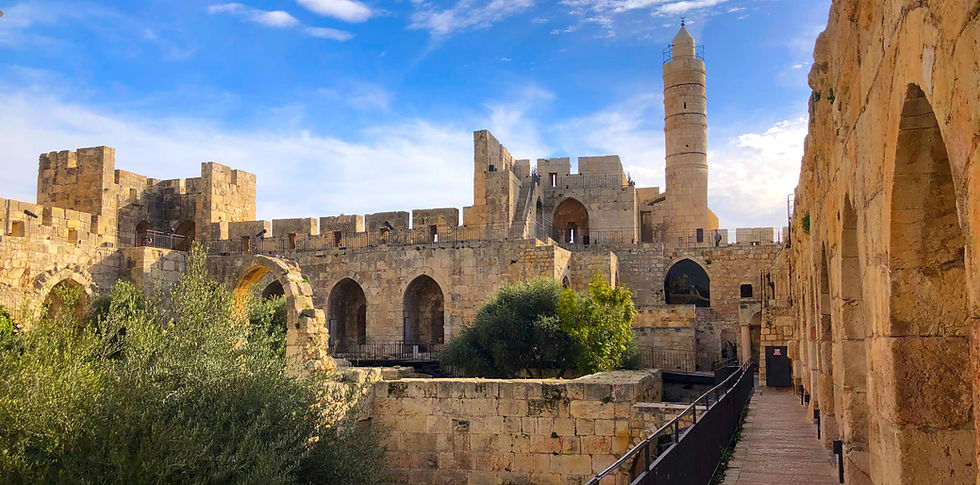
The Tower of David is one of the ancient citadel towers that guarded the primary palace of Herod the Great — yes, the same guy from the New Testament, and, for the Jews, the guy who renovated the Second Temple and built Masada.
The castle-like structure has been destroyed and reconstructed by the many empires that conquered the city since — Roman, Crusader, Ottoman, etc. — and, on a clear day, its defensive position offers a panoramic view that stretches all the way to Jordan’s Moab mountains.
But the Tower is much more than a photo op. It houses the definitive museum dedicated to Jerusalem’s history, with 10 beautifully lit rooms devoted to the different cultures that have left their mark on the city for the past 4,000 years.
This scope makes the Tower the ideal starting point for any Jerusalem deep dive.
And, if you’ve already been, there's good reason to go again: The museum was recently renovated and redesigned — now it's an audiovisual experience that mixes traditional artifacts, scale models of Jerusalem’s most iconic structures, interactive touchscreens, and charming animations projected onto its epic stone walls.

⏱️ Museum hours: Sun 12 p.m. to 5 p.m., Mon, Wed, and Thu 9 a.m. to 5 p.m., Tue 9 a.m. to 8 p.m., Fri and Sat 9 a.m. to 3 p.m.
📍 Address: Jaffa Gate, Jerusalem
🗣️ Languages: Audio guide available in seven languages
⏳ Time needed: 1.5–3 hours
💰 Entrance fees: ₪55 (adult), ₪44 (student), ₪35 (child), ₪28 (senior and disabled)
✨ Recommended for: Everyone
Edward and Helen Mardigian Armenian Museum
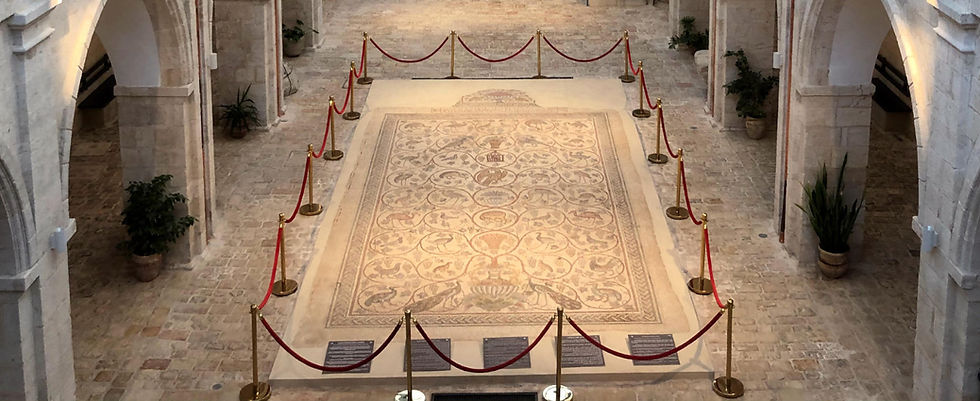
Housed in a beautifully restored 19th-century building that once served as an orphanage for children who survived the Armenian Genocide, the Helen and Edward Mardigian Armenian Museum is devoted to the history and culture of the Armenian nation, with special emphasis on its diaspora in the Holy Land.
The museum's first floor traces Armenian civilization before World War I, showcasing Renaissance-era Armenian manuscripts, intricately embroidered 19th-century liturgical robes, and exquisite Armenian craftwork — including the Jerusalem community’s famed ceramics, whose distinctive blue patterns still adorn the city today.

Upstairs, the tone shifts. The second floor documents the gruesome Armenian Genocide perpetrated in the Ottoman Empire during World War I, which led to thousands of Armenians seeking refuge in Jerusalem.
You’ll leave with a deeper appreciation for this small but culturally rich nation and an understanding of what can happen to minorities in the Middle East — two parallels that strongly resonate with Jews.
⏱️ Museum hours: Tue–Sat 9 a.m. to 5 p.m.
📍 Address: Across the street from the Armenian Quarter parking lot
🗣️ Languages: Signage predominantly in English; select items labeled in Hebrew, Arabic, French, and Armenian. No audio guide.
⏳ Time needed: 1–3 hours
💰 Entrance fees: ₪25 (adult), ₪15 (student or child). Cash only.
✨ Recommended for: Culturally curious folks ages 14+
Old Yishuv Court Museum
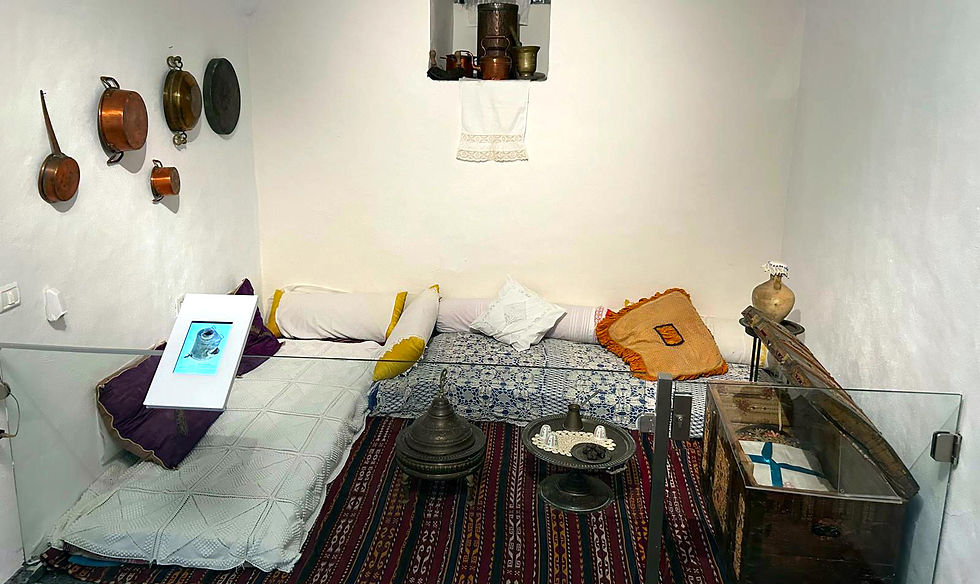
Located in a 500-year-old former residential building, the Old Yishuv Court Museum recreates 19th- and early 20th-century life in Jerusalem’s Jewish Quarter. Its restored rooms and courtyard are furnished with period artifacts and contextualized with quotes from former residents, offering a glimpse into daily life at the time.

Conditions were harsh — poverty was rampant, homes cramped, and infant mortality as high as 80%. But the resilience of a community that clung to its ancestral homeland despite immense hardship is impressive.
The museum also hosts rotating exhibitions focused on pre-State Jerusalem. The current exhibition explores Western tourists’ impressions of the city in the late 19th and early 20th centuries, featuring vintage Holy Land travel books, souvenir tchotchkes, and funny anecdotes from visitors like Mark Twain.
⏱️ Museum hours: Sun–Thu 10 a.m. to 3 p.m. and Fri 10 a.m. to 1 p.m.
📍 Address: 6 Or HaChaim St., Jerusalem
🗣️ Languages: Signage in English and Hebrew only. No audio guide.
⏳ Time needed: 1–1.5 hours
💰 Entrance fees: ₪24 (adult), ₪20 (student), or ₪12 (child, senior, or disabled visitors)
Herodian Quarter and the Burnt House

After Israel recaptured the Old City from Jordan in 1967, the flattened Jewish Quarter had to be rebuilt from scratch. But reconstruction also presented a once-in-a-lifetime excavation opportunity. As houses were built up, archaeologists dug down, and they made incredible discoveries about Jerusalem’s wealth during the Second Temple Period — and its horrific destruction by Rome following the Jewish rebellions.

The Herodian Quarter museum showcases the remains of the Upper City, once home to Jerusalem’s priestly elite. Among the finds are parts of a 600-square-meter mansion, mosaic floors, mikvaot (Jewish ritual baths), murals, and the oldest known depiction of the Temple menorah.
The Burnt House next door offers a smaller but equally unsettling glimpse of the infamous Roman siege. Excavations revealed mounds of ash, charred ceiling beams, and the skeleton of a young woman stabbed by a Roman spear. An audio-visual presentation reconstructs the dramatic events preceding the home’s arson and its inhabitants’ murder.
These two museums are part of a six-site complex that also includes the Davidson Center, Hurva Synagogue, the Plugat HaKotel Museum, and Hezekiah’s Broad Wall. You can purchase a combined ticket for any combination of the sites.
⏱️ Museum hours: Sun–Thu 9 a.m. to 5 p.m.
📍 Address: Ha-Kara'im Street, Jerusalem
🗣️ Languages: Signage in English and Hebrew only. No audio guide.
⏳ Time needed: 1.5–2 hours
💰 Entrance fees (both museums combined): ₪64 (adult), ₪52 (student), or ₪34 (child, senior, or disabled visitor)
✨ Recommended for: Ages 14+
Terra Sancta Museum

The Terra Sancta Museum displays artifacts of great meaning to the Christian faith — but it’s actually a fascinating little museum for Holy Land travelers of all backgrounds. Its archaeological collection includes remarkably intact ancient glassware, massive column bases from the Second Temple, and 2,000-year-old ossuaries — limestone boxes holding bones of the dead — some with their occupants' names chiseled in Hebrew.
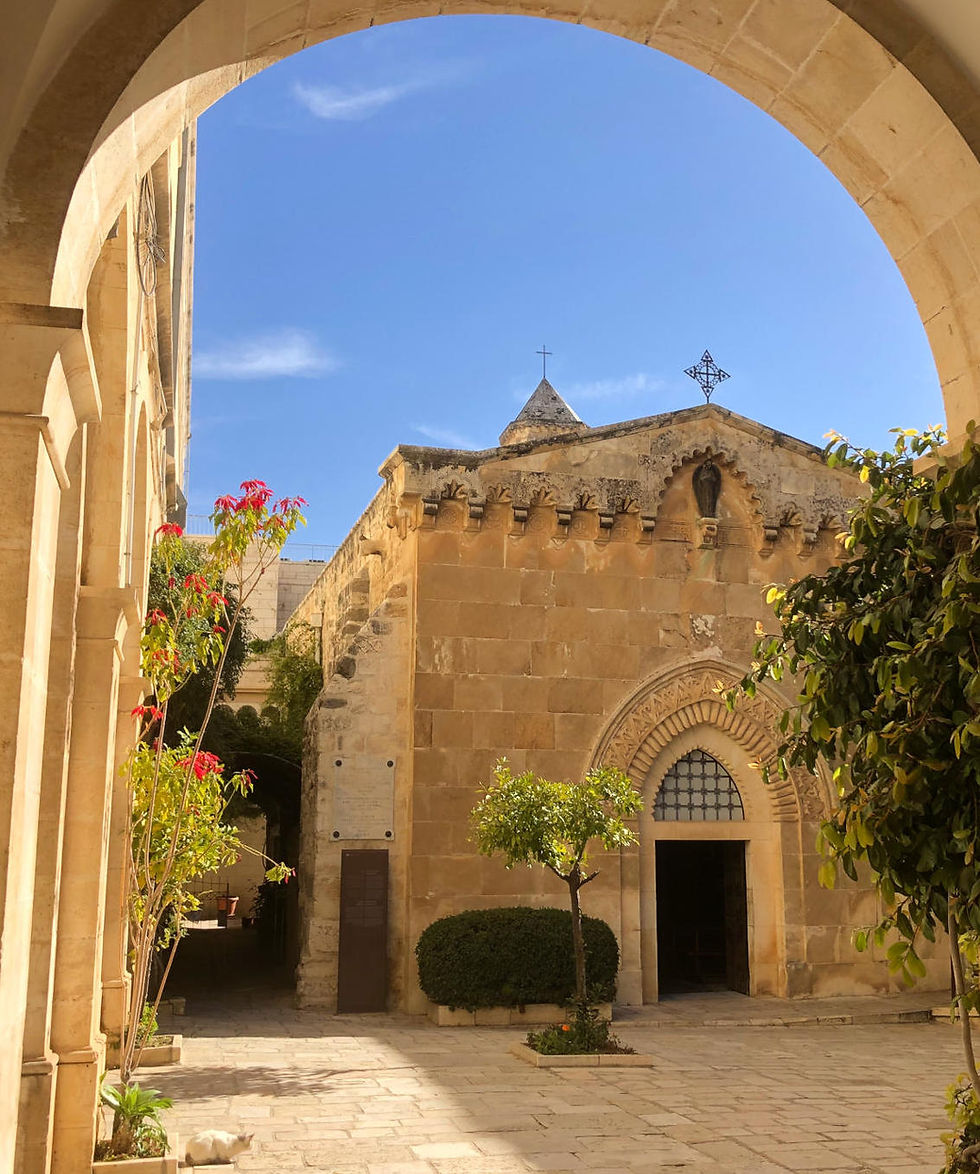
The museum is located right outside the first two stations of the Via Dolorosa — the way of the cross — so it’s a good starting point for folks interested in retracing the last steps Jesus took.
⏱️ Museum hours: 9 a.m. to 5 p.m. daily in the winter and to 6 p.m. in the summer
📍 Address: Via Dolorosa Street 1, Jerusalem
🗣️ Languages: Signage in English only
⏳ Time needed: 1 hour
💰 Entrance fees: ₪15 (adult), ₪10 (students and seniors), free (disabled visitors and children under 12)
Central Jerusalem
Hebrew Music Museum

The Hebrew Music Museum is one of Jerusalem’s hidden gems. Its collection of over 300 beautifully restored instruments — brass, keyboard, percussion, string, and woodwind — is displayed across seven immersive, gorgeously designed and decorated rooms, each reflecting musical traditions of historical Jewish communities spanning continents and centuries, from Ancient Israel to Andalusia to Central Asia and Eastern Europe.
This isn’t a hands-off museum. Guests are encouraged to play select instruments and dance to recorded Jewish melodies — presenting the perfect opportunity for kids to explore music and watch their parents make fools of themselves.

You can book a guided tour or enjoy the museum independently using an interactive tablet.
⏱️ Hours: Sun–Thu 10 a.m. to 7 p.m., Fri 10 a.m. to 2 p.m.
📍 Address: Yoel Moshe Salomon St. 10, Jerusalem
🗣️ Languages: Tours in English, Hebrew, French, and Russian
⏳ Time needed: 1.5 hours
💰 Entrance fees: ₪60 (adult), ₪45 (child/senior), ₪40 (student), ₪32 (disabled visitors)
✨ Recommended for: Families, bar/bat mitzvah tours, and anyone who enjoys music
Knesset Museum

The Knesset Museum chronicles the evolution of Israel’s parliament, the Knesset (“assembly” in Hebrew). Located in a building that housed the Knesset from 1950 to 1966, the museum includes restorations of the former Knesset’s committee rooms, visitors’ gallery, and plenum hall — where Knesset members held legislative sessions — complete with life-sized likenesses of David Ben Gurion, Golda Meir, and Menachem Begin.
Much of the museum is interactive — docents guide visitors through games that allow you to assess the debate styles of Israeli politicians and weigh in on controversial Israeli laws.
Other exhibits emphasize the stark differences between the Knesset today and of old. A recreation of the Knesset’s cafeteria from 1952 reveals an Eastern European menu full of bizarre dishes — like calf’s foot jelly. Another display shows the public bus passes once used by Knesset members to commute to work.
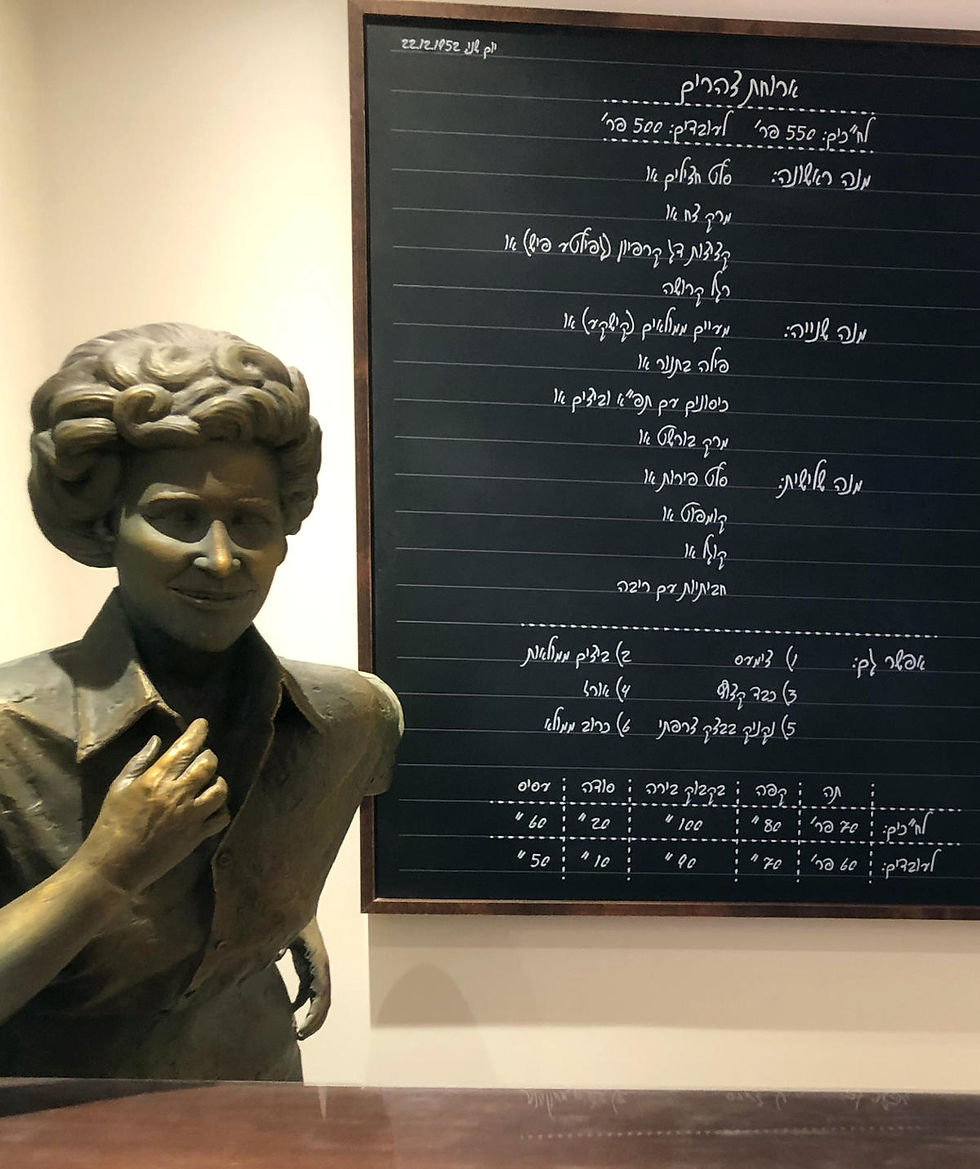
The museum makes an effort to accommodate walk-in visitors, but it’s best to book tickets in advance. The website is, unfortunately, available in Hebrew only.
⏱️ Hours: Sun, Mon, Wed, and Thu 9 a.m. to 5 p.m., Tue from 9 a.m. to 7 p.m., and Fri 9 a.m. to 2 p.m.
📍 Address: King George St. 24, Jerusalem
🗣️ Languages: Tours in English and Hebrew. No self-guided tours.
⏳ Time needed: 1 hour
💰 Entrance fees: ₪10 (adult), ₪5 (child, senior, student, or disabled visitor)
✨ Recommended for: Civically minded tourists, vintage culture fans, and folks considering aliyah (immigration to Israel)
Friends of Zion Museum

The Friends of Zion (FOZ) Museum presents a brief history of the People of Israel, with a special emphasis on the role that Christian Zionists have played in advocating for, rescuing, and repatriating Jews in the 19th and 20th centuries.
Christian Zionists' stories are told via visually striking and well-edited multimedia displays, some of which are interactive, as well as more traditional exhibits like topographical maps.
Characters presented range from the very well-known, like Queen Victoria, an early supporter of Zionism who championed the return of Jews to their ancestral homeland, to the more obscure, like Chiune Sugihara, a diplomat stationed in Lithuania during the Holocaust who saved thousands of Jews by illegally issuing them Japanese transit visas.
Entrance is available for guided tours only, which must be reserved in advance.
⏱️ Hours: Sun–Thu 10 a.m. to 4:30 p.m.
📍 Address: Yosef Rivlin St 20, Jerusalem
🗣️ Languages: Daily English and Hebrew tours. Tours in 14 other languages can be arranged with advance notice.
⏳ Time needed: 1 hour
💰 Entrance fees: ₪45 (adult), ₪35 (student/child), or ₪25 (senior)
✨ Recommended for: Christian tourists
FAQ
What’s the best time to go to a museum in Jerusalem?
The best time to go to a museum in Jerusalem is on an Israeli weekday (Sunday through Thursday), when crowds are significantly smaller than on weekends.
Which museums in Jerusalem are open on Shabbat?
Jerusalem museums that are open on Shabbat include:
The Israel Museum
Tower of David
Bloomfield Science Museum
Bible Lands Museum
Edward and Helen Mardigian Armenian Museum
Terra Sancta Museum
Which Jerusalem museums are good for kids?
Kids have a lot of fun at the Hebrew Music Museum and Bloomfield Science Museum. They have interactive, hands-on exhibits and experiences that encourage kids to participate rather than just observe.
More traditional museums focused on history, archaeology, and culture — like the Israel Museum or Tower of David — are also fun for kids when explored with an experienced guide who tailors exhibits to kids' interests and attention spans.
What ages are eligible for a child’s entry fee at Israeli museums?
Most Israeli museums consider anyone from six to 18 years old eligible for a child’s entry fee.
What is a self-guided museum tour?
A self-guided museum tour is when you experience a museum independently, without a professional, human guide. Museums facilitate self-guided tours by providing audio guides and/or text to explain their exhibits.
Most museums in Jerusalem allow self-guided tours. But some — like the Herzl Museum, Knesset Museum, and Friends of Zion Museum — allow guided tours only.
Are guided tours worth it?
Yes, for most museum visitors, guided tours are better than self-guided tours for a few reasons:
Big museums are overwhelming on a self-guided tour. Guides can direct your attention to a museum’s most important exhibits that are most relevant to your interests.
Audio guides aren’t always engaging or technologically intuitive for children and older visitors, and museum signs are usually written in very formal language. A live guide can adapt explanations to engage everyone in your tour group.
A guide provides additional context and historical background that isn’t always clear from exhibit labels, helping you understand not just what you’re seeing, but why it matters.
If a museum’s scheduled tours don’t work with your timetable, most allow entry with your own private tour guide. Get in touch with me if you're interested in seeing one or more of these Jerusalem museums on a private tour.
About the Author
Karl Walter is a licensed Israeli tour guide with over 30 years of experience leading thousands of travelers across the country he calls home.
A trained botanist, polyglot, and cave crawler, he combines deep knowledge of Israel’s history, culture, and landscapes to craft highly personalized, unforgettable journeys.


dự đoán xsmb mình thấy bạn bè nói hoài nên tiện tay bấm vào coi thử cho biết. Mình cũng không rảnh đọc kỹ đâu, chủ yếu xem giao diện có dễ nhìn không thôi. Lướt một vòng thấy trang làm khá gọn, khoảng trắng vừa đủ nên mắt đỡ mệt, kéo xuống cũng không bị rối. Mấy phần thông tin họ để dạng bảng theo cột nhìn nhanh hiểu, kiểu liếc cái là nắm được ý chính chứ không phải ngồi đọc cả đoạn dài. Menu thì nằm chỗ dễ thấy, bấm qua lại vài mục vẫn giữ được cảm giác “đang ở đâu” nên không bị lạc. Nói chung hợp kiểu người chỉ ghé xem nhanh như mình,…
xosoplus mobi mình thấy bạn bè nói hoài nên ghé thử cho biết, chủ yếu xem họ trình bày ra sao chứ không có ngồi canh dự đoán đúng sai. Vào là thấy họ chia mục XSMB rõ ràng theo kiểu “Chủ Nhật”, rồi dẫn thẳng tới bài ngày 19 07 2026 và phần dự đoán cho 20 7 2026 nên mình lướt không bị rối. Mình để ý nhất là khúc bảng “Đầu Lô tô Đuôi Lô tô”, nhìn như chia cột sẵn nên mắt bắt số nhanh, kéo xuống cũng không bị dính chữ hay loạn dòng. Nói chung kiểu sắp xếp này hợp ai thích xem dữ liệu gọn gàng, đặc biệt là block “Đầu Lô tô…
https://keonhacai5.net/ dạo này mình thấy nhiều người nhắc nên cũng bấm vào coi thử cho biết. Mình không đọc sâu đâu, chỉ lướt nhanh xem giao diện có dễ nhìn không thôi. Cảm giác đầu tiên là trang làm khá gọn, nhìn không bị rối kiểu nhồi chữ lung tung. Mấy phần thông tin được chia thành từng khối rõ ràng nên kéo xuống vẫn theo dõi được mình đang ở đâu. Mình cũng thích cái cách họ để menu khá dễ thấy, chuyển qua lại vài mục không phải tìm mỏi mắt. Nói chung lướt tầm vài phút là nắm được ý chính, vì bố cục chia khối và các bảng dạng cột nhìn khá sạch trên trang.
siempreeslunes.com hôm bữa mình lướt thử vì thấy tên xuất hiện đâu đó, vào xem cho biết thôi. Mình không rành mấy trò cụ thể nên chỉ nhìn nhanh cách họ trình bày. Cảm giác đầu tiên là trang làm theo kiểu “cổng game giải trí trực tuyến” và viết giới thiệu khá dễ hiểu, đọc vài dòng là nắm được họ nhắm tới cả người mới lẫn người chơi lâu năm. Giao diện nhìn hiện đại, chữ không bị dày đặc, các phần nội dung tách khối rõ nên kéo xuống cũng không bị lạc. Mình thích cái cách họ đặt tiêu đề to, chia đoạn gọn gàng, nhìn phát biết đang ở phần nào, nhất là mấy khối…
rophim dạo này mình thấy nhiều người nói nên ghé thử cho biết, kiểu vào xem giao diện ra sao thôi chứ chưa kịp “chấm” phim. Vừa mở lên cái là trang hiện nội dung khá nhanh, không bị mấy lớp hiệu ứng che màn hình nên lướt thấy nhẹ đầu. Mình thích cái cách họ bày phim theo khối nhìn gọn, chữ không bị dồn dập nên tìm mục mình cần cũng dễ. Thử bấm vài phim thì thấy có ghi Vietsub rõ ràng, nhìn phát biết ngay khỏi phải đoán. Mình xem trên điện thoại cũng ổn, kéo xuống chuyển mục không bị khựng nhiều. Nói chung cảm giác là trang ưu tiên cho mình thấy danh sách…